360 feedback questions: competencies and examples
The questionnaire is the most underestimated part of 360 feedback. If competencies are vague, each person rates something different and the report says nothing. If there are too many, someone reviewing six peers ends up ticking the same box everywhere.
How many competencies to include
5 to 10 competencies works well. Think about how many reviews each person will fill in: a manager with five direct reports does their self-review, their team's reviews and maybe some peers. With 8 competencies that is 8 questions per review, not 8 per cycle.
Describe each competency as a behavior
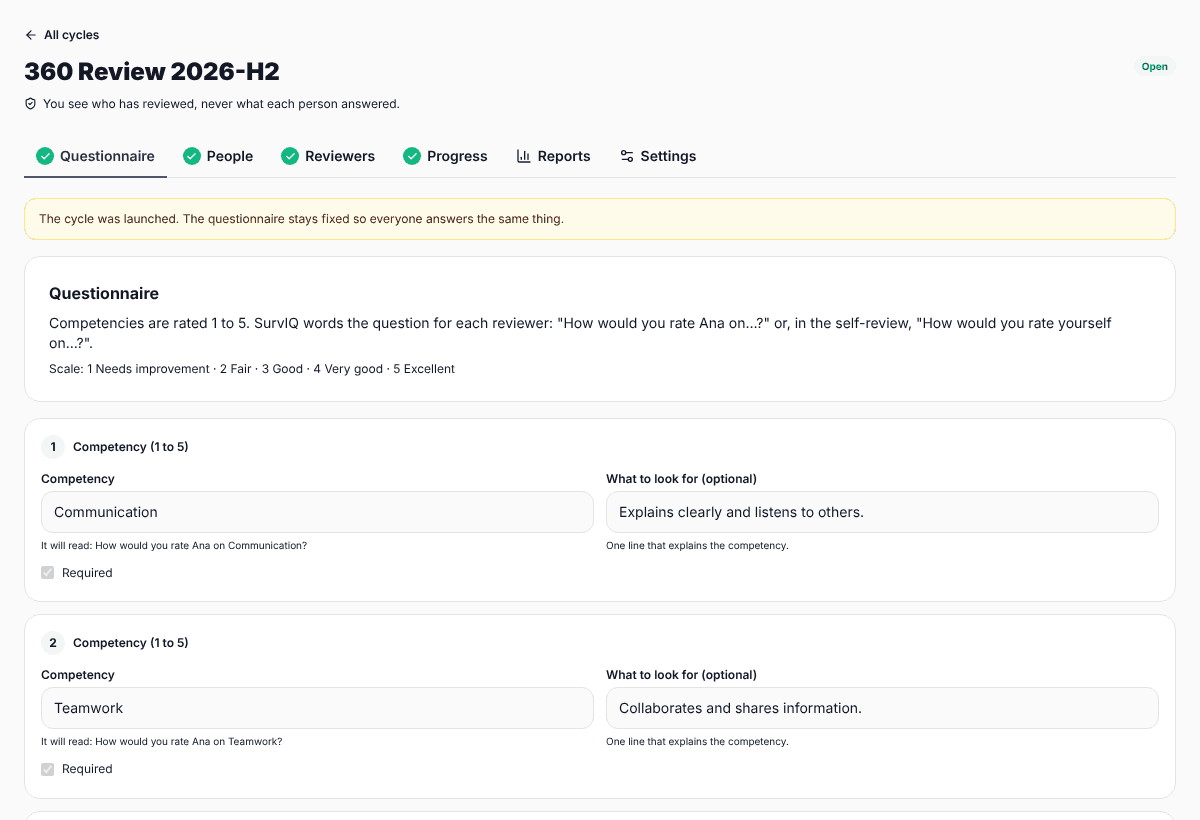
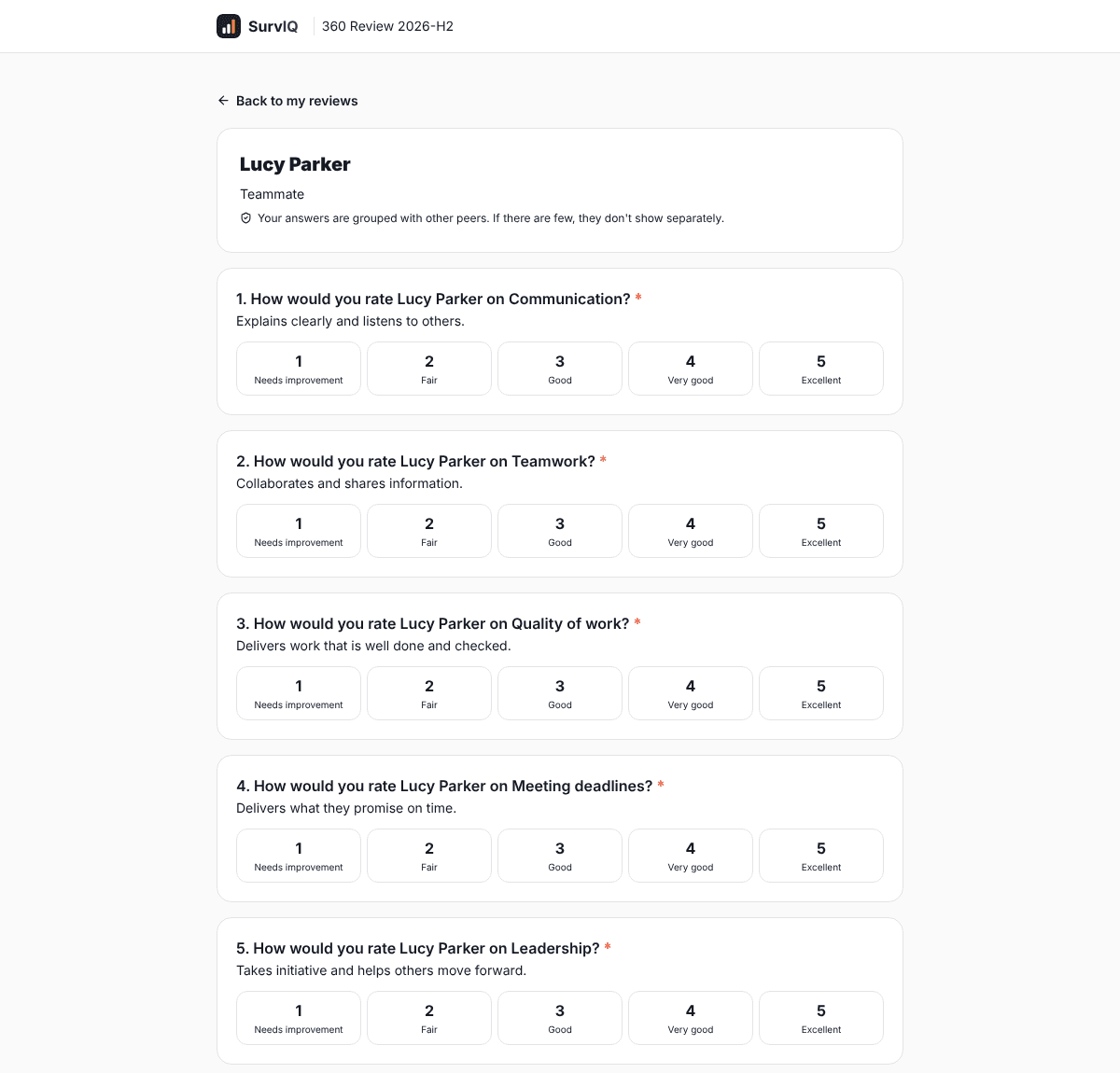
"Leadership" means something different to everyone. "Takes initiative and helps others move forward" is something you can observe. Write each competency with a short name and one line describing what you see when someone has it.
12 example competencies
- Communication: explains clearly and listens to others.
- Teamwork: collaborates and shares information.
- Quality of work: delivers work that is well done and checked.
- Meeting deadlines: delivers what they promise on time.
- Leadership: takes initiative and helps others move forward.
- Customer focus: understands what the customer needs and responds on time.
- Problem solving: finds the cause of a problem and proposes solutions.
- Adaptability: adjusts quickly when priorities change.
- Organization: plans their work and prioritizes what matters.
- Developing their team: gives feedback and helps their people grow.
- Decision making: decides with the information available and owns it.
- Reliability: you can count on what they say they will do.
Not all of them apply to every role. "Developing their team" only makes sense for people who manage others. If your company has its own values, turn them into behaviors and use them as competencies.
The scale
A 1 to 5 scale with clear labels is the easiest to answer: Needs improvement, Fair, Good, Very good, Excellent. Avoid agreement scales ("Strongly agree") to rate a person: it is more natural to ask "How would you rate Anna on communication?".
Open questions that actually help
Two or three open questions are enough. The ones that work best ask for something specific:
- What should this person keep doing?
- What could this person improve?
- What could they do differently to make working with them easier?
In the self-review, the same question is in second person: "What should you keep doing?". SurvIQ keeps one version for others and one for the self-review.
Build it with AI or from a template
If you do not want to start from scratch, in 360 feedback you can describe the company, the roles and what you want to evaluate, and the AI proposes competencies and open questions. You can also bring the questions from a survey or template you already have. Either way nothing is saved until you review and adjust it before launching.