Patient satisfaction survey: what to ask in a clinic or practice
In healthcare, most unhappy patients do not complain. They switch clinics next time and, if anyone asks, they tell the story. A short survey after each visit is the cheapest way to find out sooner.
A small clinic with 30 visits a day has about 600 a month. Even if only one in four people answers, that is 150 responses a month: enough to see trends by department.
Ask about each step of care
The patient experience is not just the consultation. It starts when they book and ends when they know what to do next. If you only ask "how was your visit?", you will not know where the problem is.
1
Booking
Was it easy to book?
2
Waiting
How long, and how did it feel?
3
Visit
Was the treatment explained?
4
Billing
Any surprises in the bill?
5
After
Do they know what to do next?
You do not need a question for every moment in every survey. A good base:
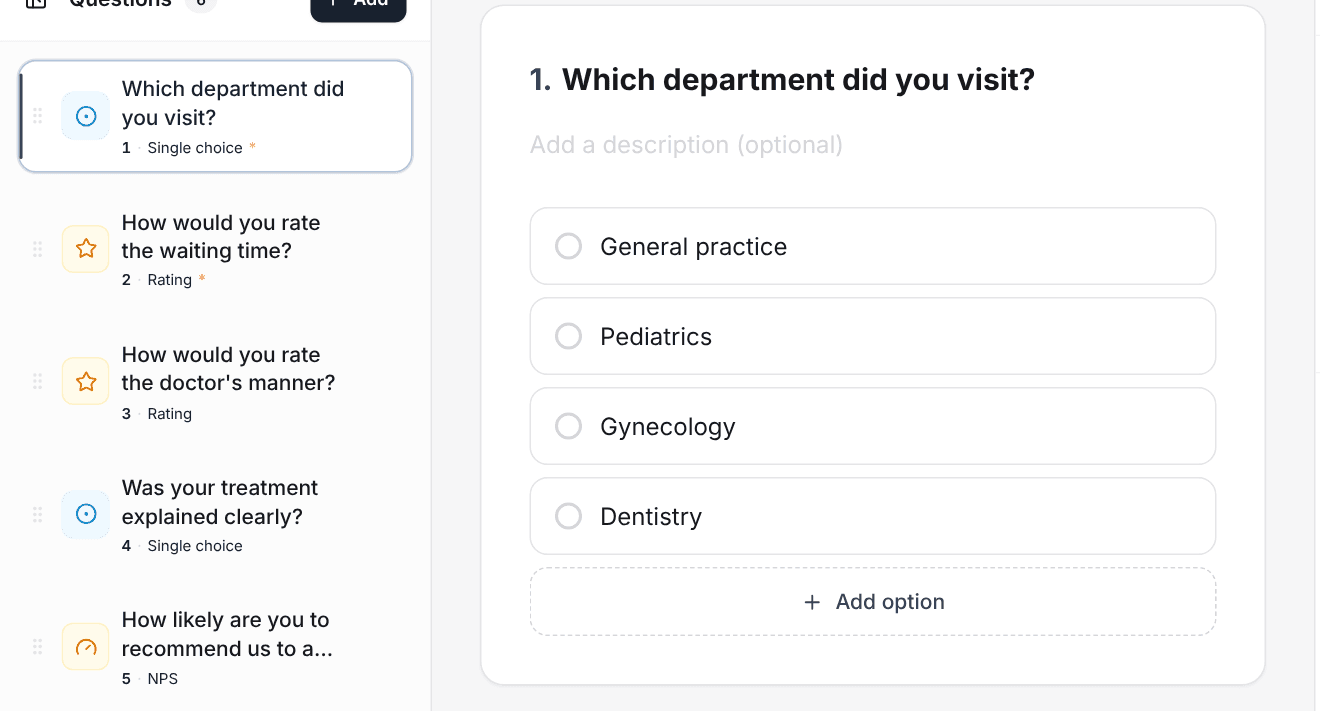
- Which department did you visit?
- How would you rate the waiting time? (1 to 5).
- How would you rate the doctor's manner? (1 to 5).
- Was your treatment explained clearly? (Yes, fully / Partly / No).
- How likely are you to recommend us to a family member? (0 to 10).
- What could we improve?
When and how to send it
- The same day as the visit, while the patient still remembers the details.
- By text message or email, with a short note saying what it is for and how long it takes.
- A QR code in the waiting room or on the receipt also works, especially for people who do not leave their details.
- Let people answer without giving their name. Many patients will not criticize their doctor if they think the doctor will read it.
Avoid asking about diagnoses or clinical details in a satisfaction survey. You do not need them to improve the service, and they only add sensitive data you would have to protect.
Comparing departments
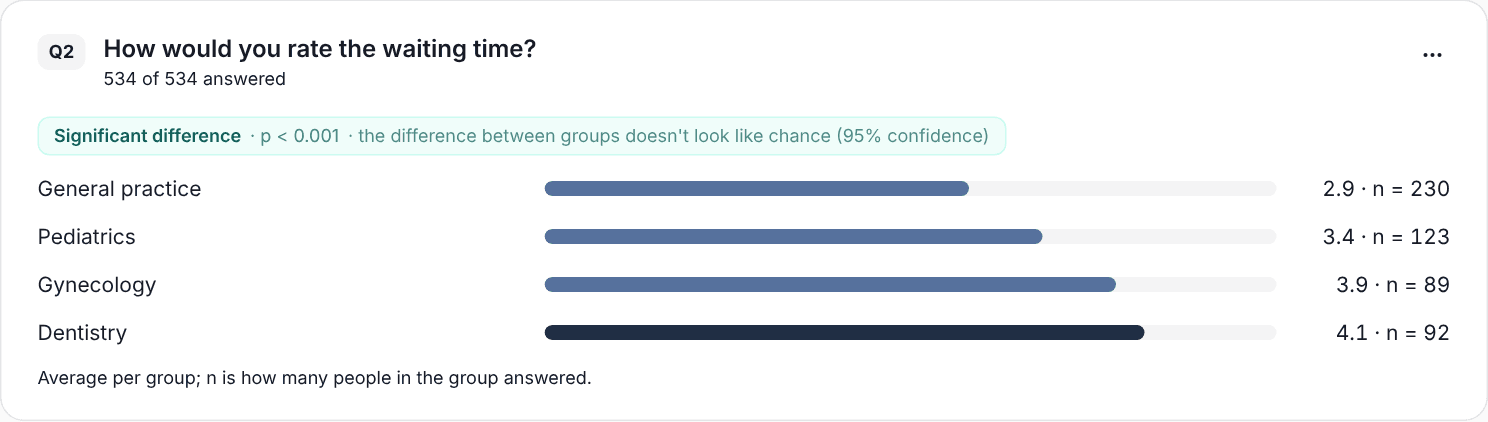
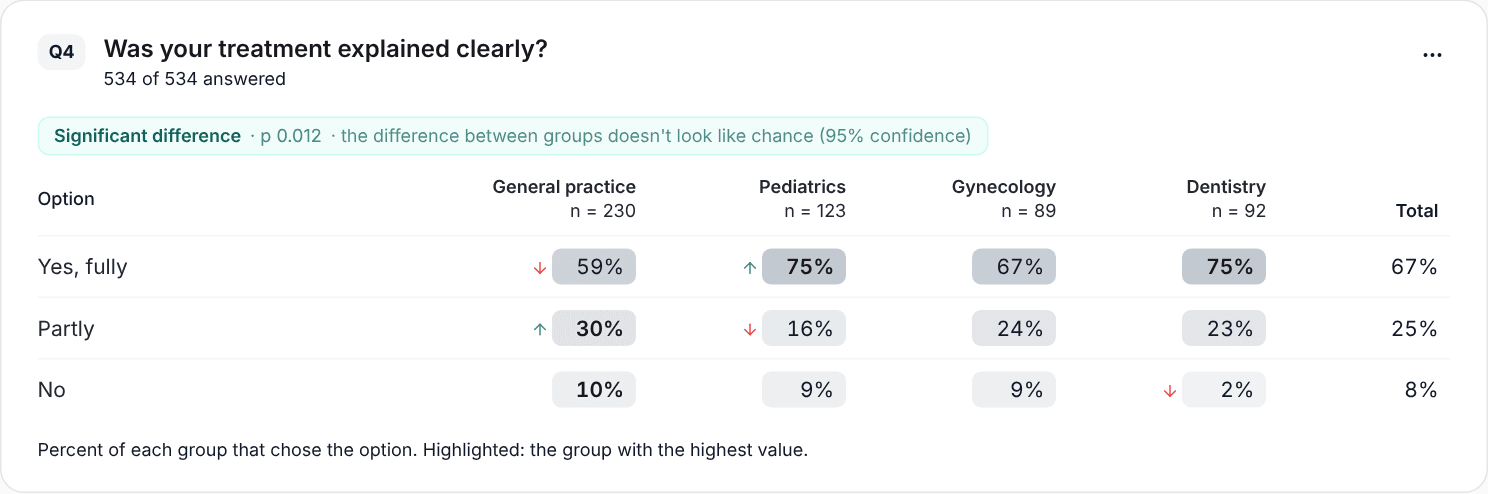
With the department as the first question, you can see where each problem sits. The most common pattern is that the doctor's manner scores well everywhere and the waiting time scores badly in one or two departments.
Closing the loop
If someone gives a very low score and left their contact details, call them that week. Not to defend yourself, but to understand what happened. A patient who feels heard usually comes back, and sometimes ends up recommending the clinic precisely because of how the problem was handled.