Feedback at conferences and large events: hundreds of responses in one day
A 500-person conference can give you 300 responses in an hour or 40 in a week. The difference is rarely the questions: it is the moment you ask.
Ask in the room, not only by email
The best moment is the end of the last session, with the QR code on screen and someone on stage saying "it takes two minutes, let's do it now". People are seated, phone in hand, with the event fresh in mind.
- 1
In the room
Last 5 minutes
A QR code on the closing slide. This is when most people answer.
- 2
By email
Same day
For those who left early or joined online.
- 3
Reminder
48 hours later
Just one, to people who did not answer.
The same-day email is for people who left early and for the online audience. One reminder two days later is enough; a third one adds no responses and does annoy people.
Few questions, one that splits attendees
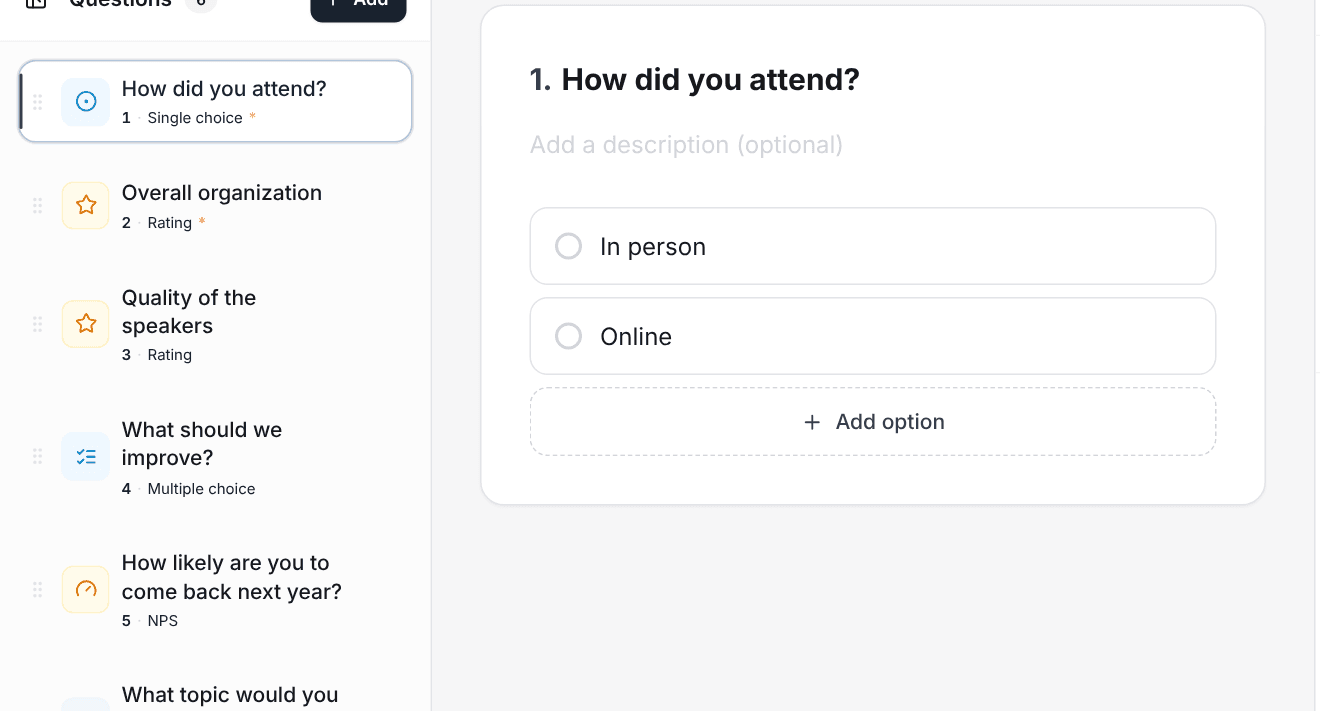
- How did you attend? (in person / online). This is the question that lets you compare later.
- Overall organization (1 to 5).
- Quality of the speakers (1 to 5).
- What should we improve? (timing, audio and video, food, networking, price).
- How likely are you to come back next year? (0 to 10).
- What topic would you like next year?
If the event has many parallel sessions, do not ask people to rate each one in the same survey. Use a "which session did you like most" question, or a different QR code per room.
In-person and online attendees live different events
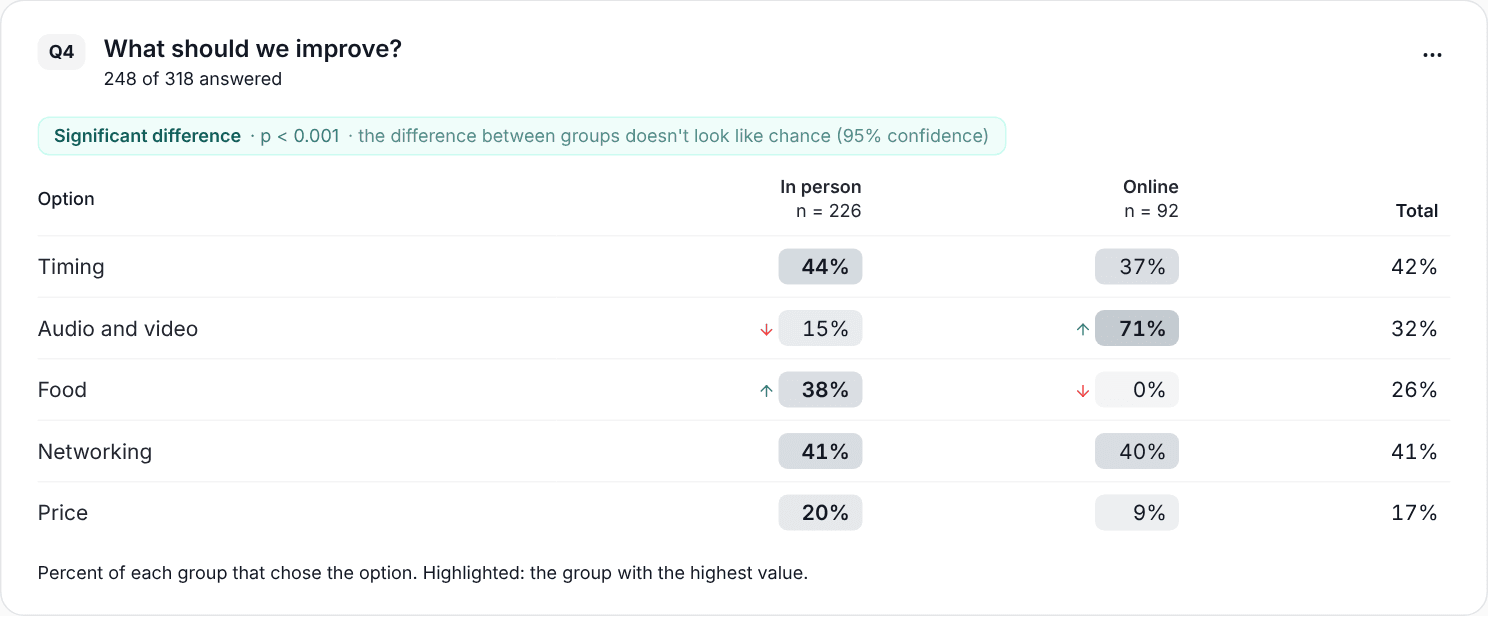
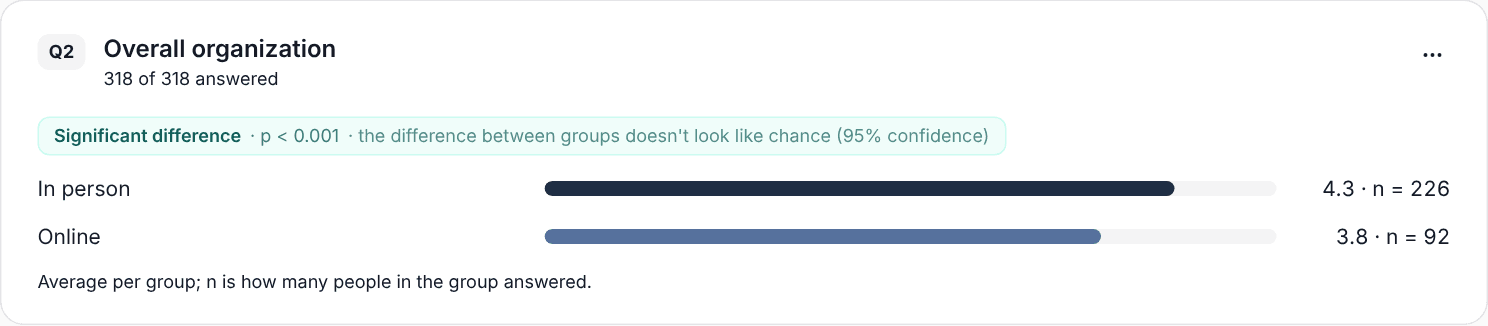
At a hybrid event, mixing all responses hides problems. The in-person crowd complains about food and timing; the online crowd, about audio. Looked at together, neither problem seems big.
After the event
Share a summary with speakers and the team that same week, while they still remember what happened. And keep the survey: next year you duplicate it, change the event name and compare with the same questions.