180, 360 or a classic performance review: which one fits your company
When a company decides to "start evaluating staff", the first word that comes up is 360. But it is not always the best place to start. The difference between the three formats is who does the reviewing.
| Who reviews | Classic | 180° | 360° |
|---|---|---|---|
| Manager | |||
| Self | |||
| Peers | |||
| Direct reports | |||
| Clients (optional) |
Classic performance review
The manager reviews each person on their team, usually against goals and a few competencies. It is quick, easy to organize and useful for decisions like raises or promotions. Its weakness is that it relies on one point of view: if the manager does not see the daily work or has favorites, the result shows it.
180 review
It adds a self-review to the manager's view. It looks like a small change, but it opens the most useful conversation: where the two do not match. It is a good first step for companies that have never run reviews and want people to take part without exposing anyone.
360 feedback
It adds peers and direct reports, sometimes clients too. It gives the fullest picture of how someone works, especially on competencies the manager rarely sees: how they treat colleagues, how they lead, how they communicate.
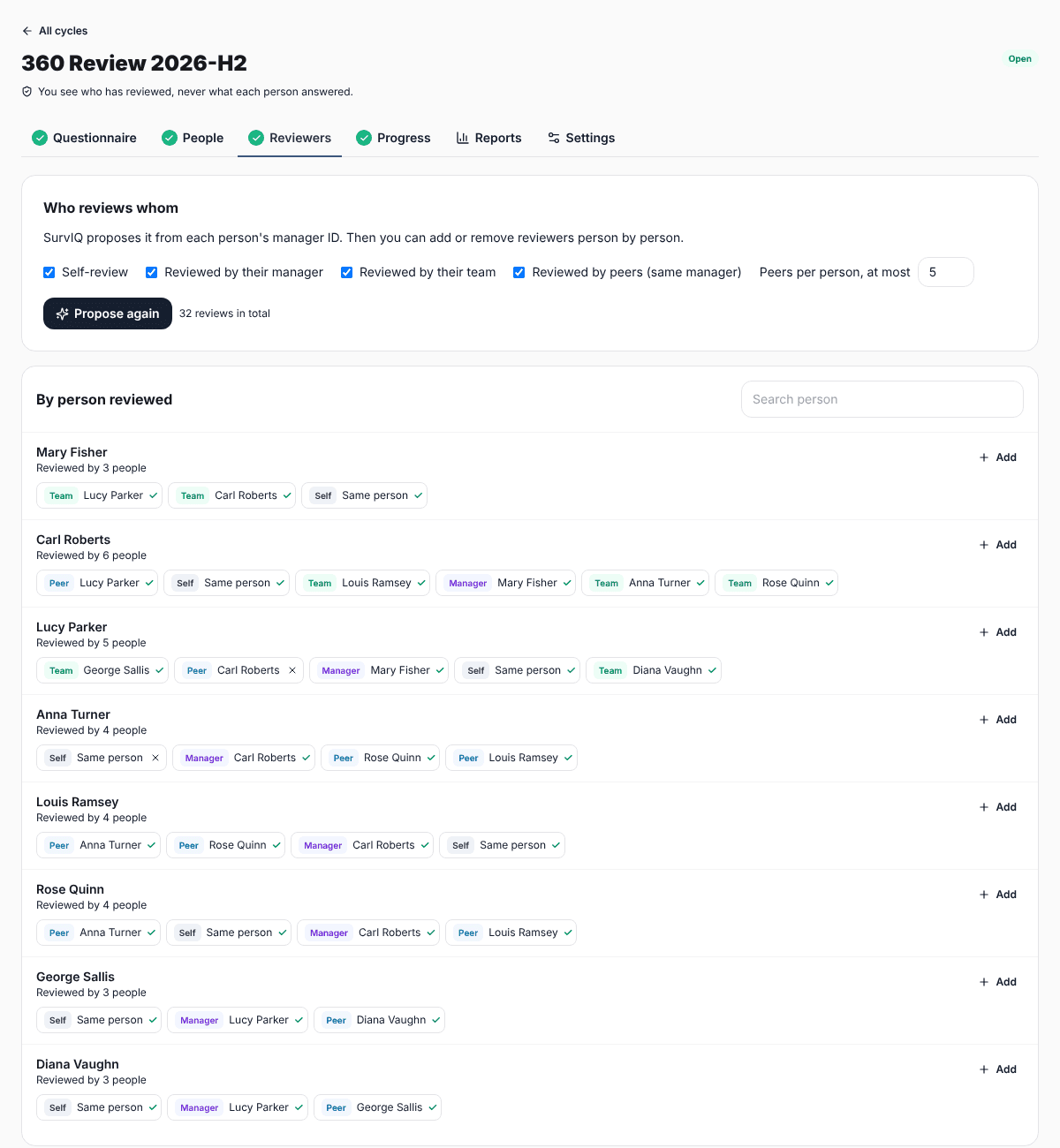
The cost is volume. In a 40-person company where each person gets 5 to 7 reviews, that is over 200 forms per cycle. That is why it pays to use a tool that assigns reviewers, tracks progress and builds the reports, instead of collecting answers by hand.
Which one fits
- If you have never run reviews and need a basis for pay decisions: a classic review with clear goals.
- If you want people to take part and start development conversations: 180.
- If the goal is to develop leaders or see how people work together: 360.
- If the company has fewer than 10 people: a full 360 is rarely truly anonymous. A 180 plus frequent conversations works better.
One recommendation that comes up again and again: do not use 360 feedback to decide pay. When people know their review of a colleague affects that colleague's bonus, they stop answering honestly. 360 works best as a development tool, kept separate from the performance review.