How to evaluate a training: what to ask at the end and 30 days later
Almost every training ends with a short survey: did you like it, was the trainer clear, would you recommend it? That survey is useful, but it only answers one question: how participants felt that day. It does not say whether they learned anything or changed how they work.
The most common way to organize this is four levels, each with its own timing.
- 1
Reaction
Right after
Was it useful? Did the trainer explain well? Would they recommend it?
- 2
Learning
Right after
A short quiz: what do they know now that they did not before?
- 3
Behavior
30 to 60 days
Are they using it at work? Ask their manager too.
- 4
Results
3 to 6 months
Business indicators: complaints, sales, errors, turnaround times.
Level 1: reaction, right after
This is the usual survey, but it should ask things that help the next edition:
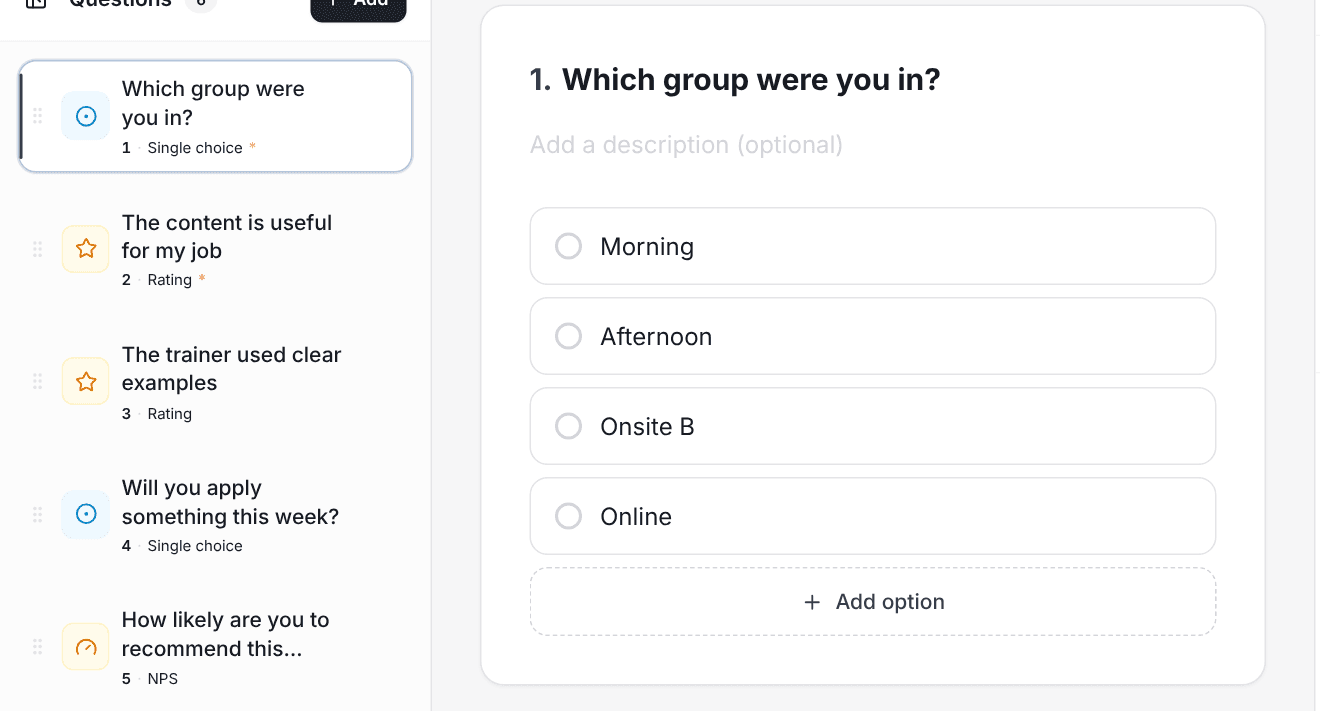
- The content is useful for my job (1 to 5).
- The trainer used clear examples (1 to 5).
- Will you apply something this week? (Yes, I know what / Probably / I don't think so).
- How likely are you to recommend this training to a coworker? (0 to 10).
- What would you change?
If the training runs in several groups (morning, afternoon, another site, online), add a question asking which one each person attended. That is the question that lets you compare later.
Level 2: learning, with a short quiz
Five to ten questions about what was taught, with a correct answer. If you run them before and after the course, you see how much each group learned. In SurvIQ you can do this with exam mode, which grades automatically and shows which questions most people got wrong: those are usually the topics the course explained worst.
Level 3: behavior, 30 to 60 days later
This is the level almost nobody measures and the one the business cares about most. A short survey to participants and, if possible, their managers:
- Did you use what you learned at work in the last month? In what situation?
- What stopped you from applying it? (no time, does not apply to my role, my manager does not support it, other).
- For the manager: have you noticed any change in how this person works?
The question about what stopped them is often the most valuable. Many times the course was fine and the problem is somewhere else.
Level 4: results
This one is not measured with a survey but with the indicators the training meant to move: customer complaints, sales, errors, service times. The survey helps explain those numbers; it does not replace them.
Comparing groups without fooling yourself
A company training 150 people in four groups collects several hundred responses across the reaction survey, the quiz and the follow-up. With that volume you can compare groups with confidence.
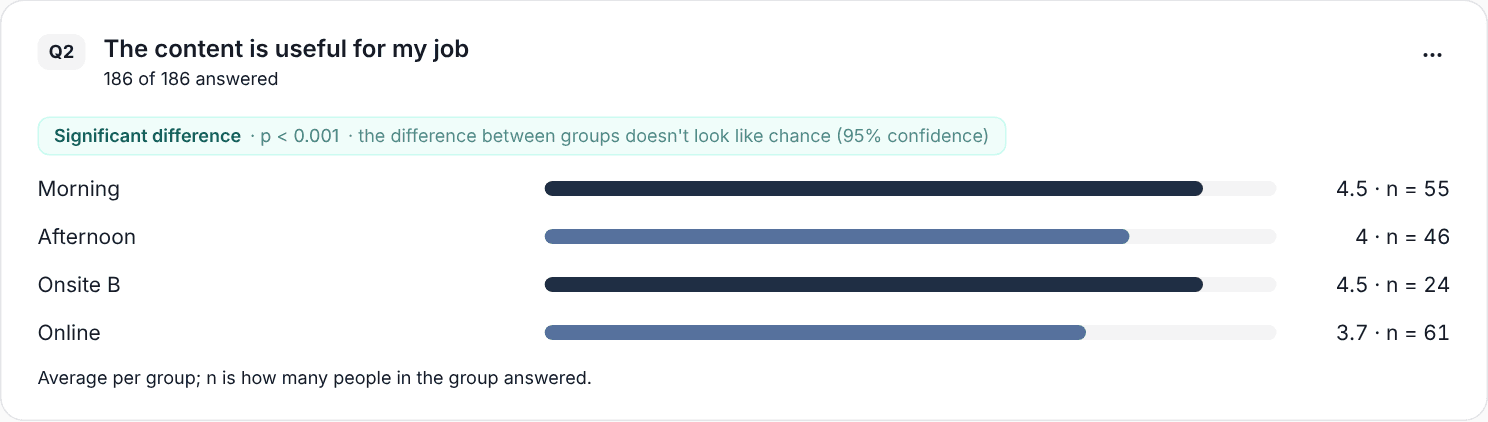
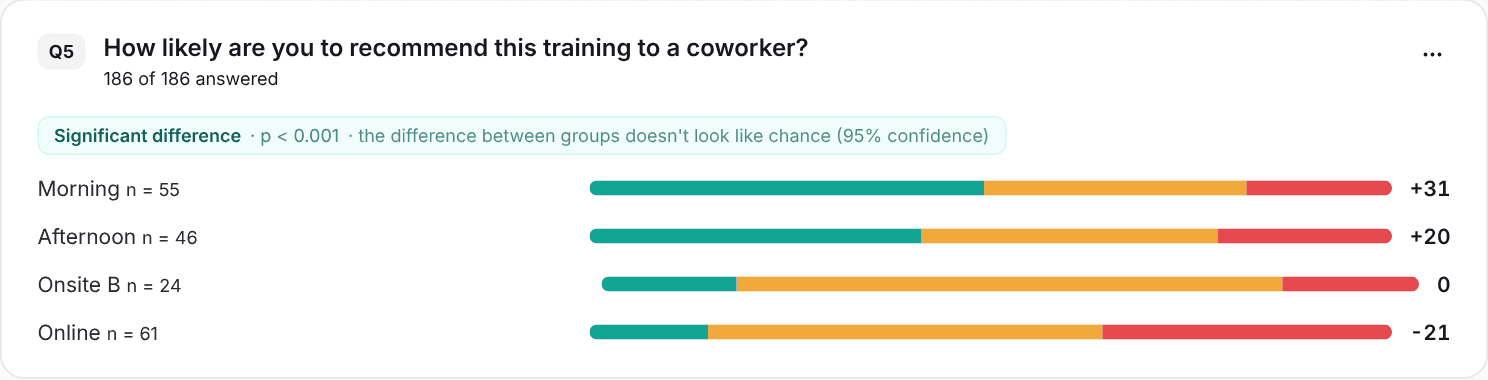
If one group scores lower, check the context before blaming the trainer: time slot, connection, group size. That group's open answers usually explain the difference.