How to deliver 360 feedback results (without turning it into a trial)
A 360 review can be perfectly designed and still fail in the last half hour. If the person gets their report by email, with no context, they will most likely read only the low numbers and spend the week guessing who said what.
The debrief is a 45 to 60 minute conversation between the person and someone prepared to walk them through it: their manager, someone from HR or a coach. It has four parts.
- 1
Context
What the report is for and what it is not: it does not decide pay or dismissals.
- 2
Strengths
Start with what others value. These are data, not compliments.
- 3
Gaps
Where their self-review and others' views do not match.
- 4
Plan
One or two concrete behaviors for the next few months.
Before: read the report calmly
Whoever leads the debrief should read the report at least a day before. Look for three things: two or three clear strengths, one or two important gaps, and the places where the self-review does not match what others say.
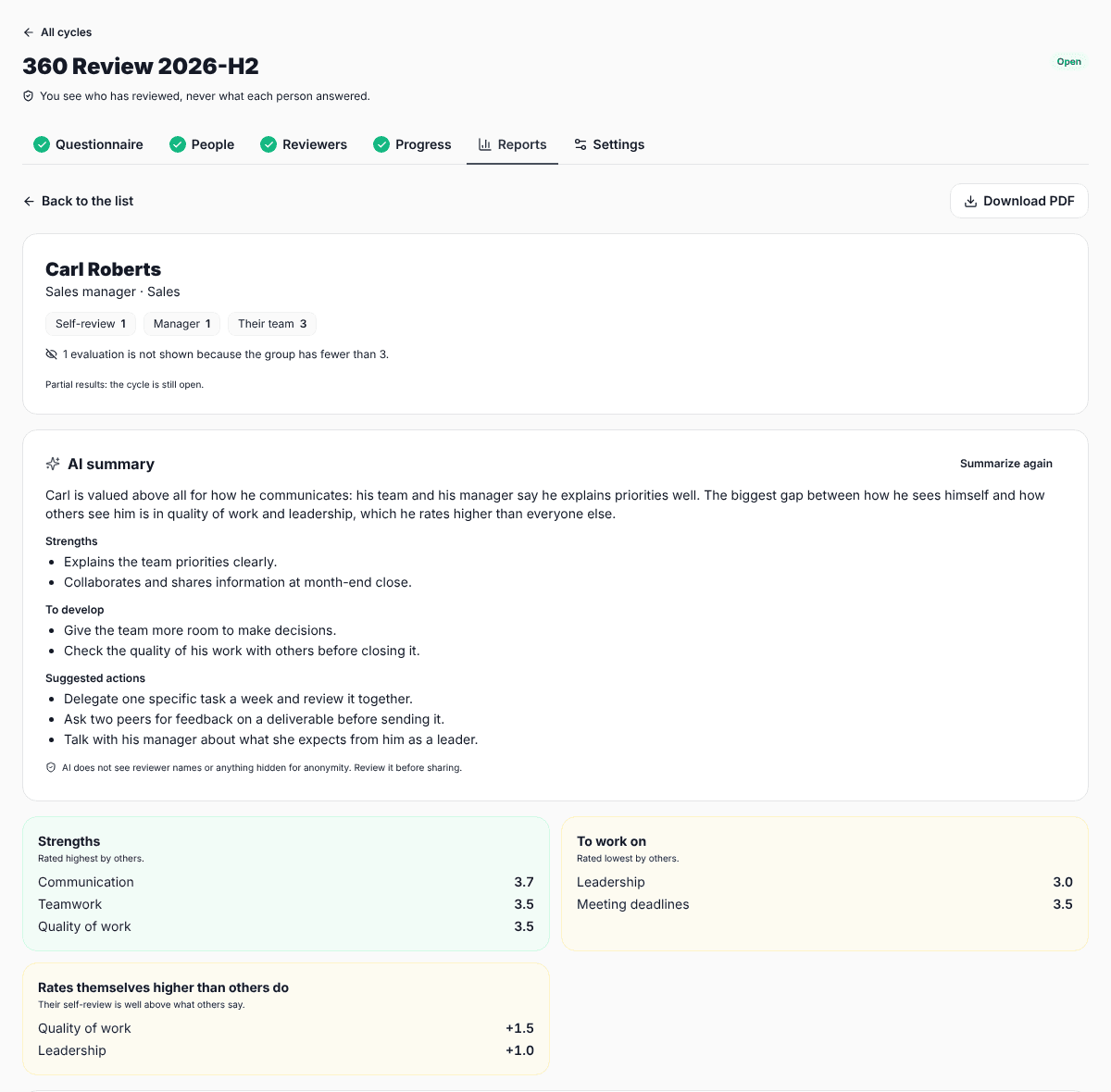
Do not try to cover everything. A report with ten competencies holds material for ten conversations; this is only one.
1. Context
Start by saying what the report is for and what it is not. It is a picture of how others see the way they work, not a verdict. It does not decide pay or dismissals. Answers are anonymous and nobody will try to find out who wrote what.
2. Strengths
Starting with the positive is not about softening what comes next. Strengths are as useful as gaps: they say what to keep doing and what the person can lean on to improve the rest.
3. Gaps
The most useful part of the report is often the gap between how the person sees themselves and how others see them. Someone who rates themselves 5 on communication and gets a 3 from their team has a gap they probably did not know about.
- Ask before you explain: "what surprises you here?".
- Talk about behaviors, not personality: "you interrupt in meetings", not "you are impatient".
- If they get defensive, do not argue about the numbers. Acknowledge it is hard to hear and go back to what the team might be seeing.
- Do not try to guess who answered what. If they try, remind them that is not the point.
4. Plan
End with one or two concrete behaviors for the next three to six months. Not "improve communication" but "in weekly meetings, let each person finish before responding". Write the plan down and schedule a check-in.
In the next 360 cycle, that is the competency most worth watching: if the plan worked, it shows in the numbers.