Individual development plan (IDP): how to build one, with examples
 By Enzo CaminoPsychologist and founder of SurvIQ
In many companies the development plan is a box on the form that says “take a leadership course”. Nobody looks at it again until next year, when the same text gets copied. A good individual development plan (IDP) is short, concrete and reviewed during the year.
What it should include
- One or two things to develop, not five. They come from the review: the most important gap or the strength worth building on.
- Two or three concrete actions for each.
- A date for each action.
- Who supports it: the manager, a mentor, someone on the team.
- How the change will show, and a date to review it together.
The 70-20-10 rule
It is a widely used reference in people development: most of what we learn at work comes from doing new things, some from other people and a small part from courses. It is not an exact figure, but it helps avoid plans that are just a list of trainings.
On the job: projects and new challenges. From other people: a mentor, feedback, shadowing. It is a reference, not an exact rule.
Examples by situation
Communication (gap)
- On the job: present the area’s progress at the monthly meeting, March to June.
- With others: after each presentation, 10 minutes of feedback with their manager on what landed and what didn’t.
- Course: a short effective presentations workshop before March.
- How it shows: in the June review, the team says they understand the area’s priorities better.
Getting ready to lead (strength to build on)
- On the job: run onboarding for the two new hires this half.
- On the job: lead the supplier change project, with their manager as backup.
- With others: a monthly conversation with a manager from another area as mentor.
- How it shows: the new hires reach their first-quarter goal and the project closes on time.
Organization and deadlines (gap)
- On the job: use the goal tracking board and update it every Friday.
- With others: a 15-minute review with their manager every two weeks to look at what is coming.
- How it shows: the quarter’s deliverables on time, without reminders.
Common mistakes
- Actions that don’t depend on the person (“the company assigns me a project”). If support is needed, say who gives it.
- Only courses. A course with no chance to use what was learned is forgotten within weeks.
- No review date. If nobody looks at it until December, it doesn’t exist.
- A plan written by the manager without the person. It has to come out of the conversation, with what the person wants to learn.
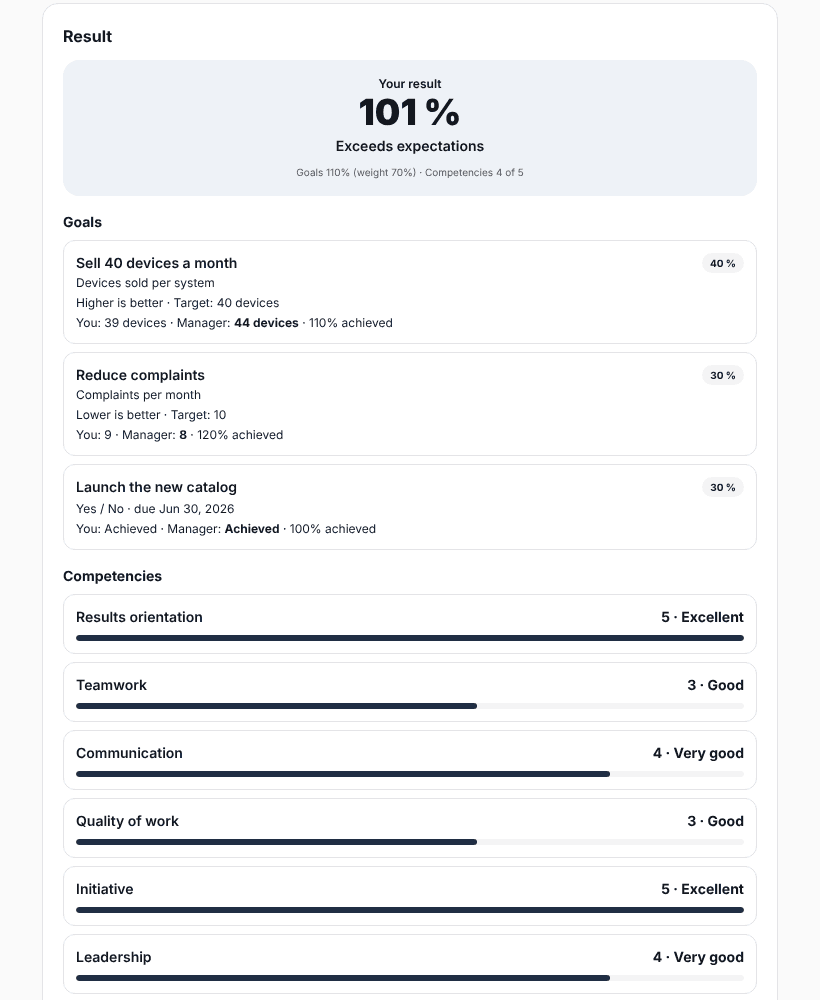
The free template has a development plan section, ready to print and sign:
Free performance review template (Excel and Word)Goals, self-review, manager review, 9-box calibration and sign-off, in a portal where each person signs in without an account.
See SurvIQ Performance Review