How to run a performance review meeting (with example phrases)
 By Enzo CaminoPsychologist and founder of SurvIQ
You can have perfect goals, a crystal-clear scale and flawless calibration, and still lose it all in the final meeting. If the person walks out without understanding their score or knowing what to do differently next year, the review did not work.
A good meeting lasts 45 to 60 minutes and follows roughly this order:
- 1
Prepare
1 day before
Read the self-review and bring 2 or 3 concrete examples.
- 2
Open
5 min
Explain what the meeting is for and ask how they see their year.
- 3
Review
20 min
Goals and competencies: what went well first, then what was missing.
- 4
Look ahead
15 min
What they want to learn and what they need from you.
- 5
Close
10 min
2 or 3 actions with dates. The person adds their comment.
Before: prepare three things
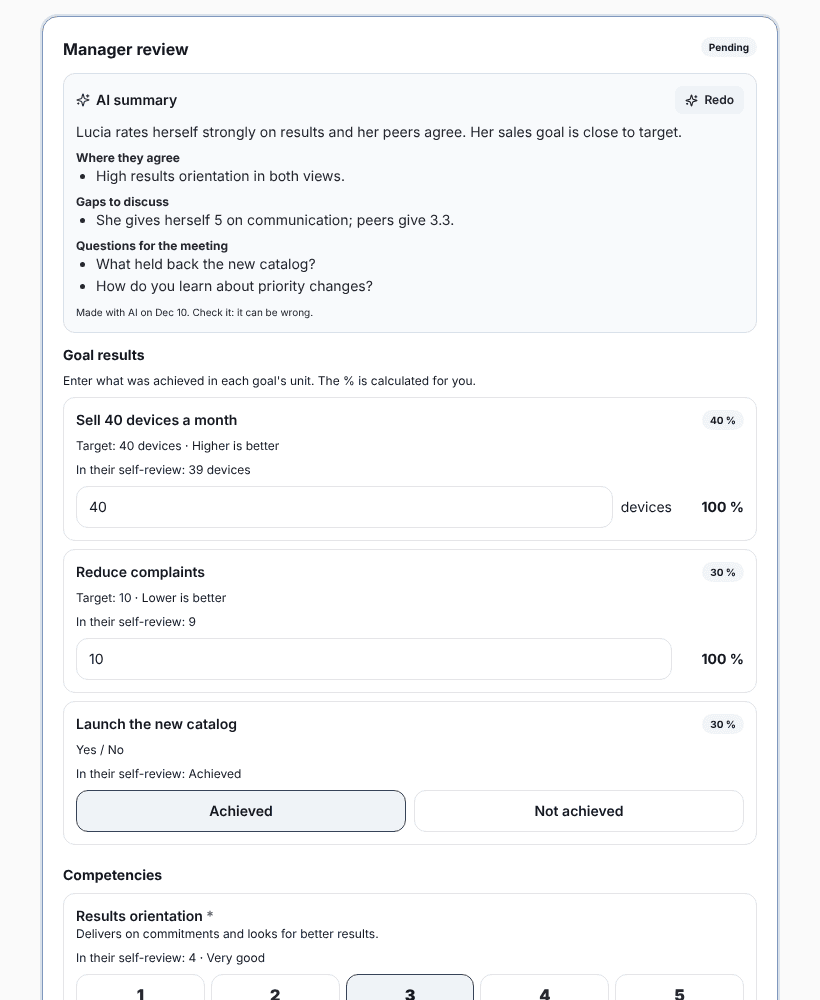
- Read their self-review and mark where it matches yours and where it does not. Those gaps are the heart of the conversation.
- Bring two or three concrete, dated examples of what went well and what was missing.
- Think of one or two things you want them to do differently. Not ten.
Open with a question
Explain in one sentence what the meeting is for and ask before giving your view.
- “The idea is to go over your year, see what went well and what was missing, and agree on next year. Before I share my view: how do you feel it went?”
- “What are you proudest of this year?”
Review results: what went well first
Start with goals met and strengths. It is not to soften things: it is real information about what to keep doing. Then move to what was missing, always with facts.
- “You beat the sales goal by 7%, and you did it after a hard first quarter. That is not luck.”
- “The new customers goal ended at 75%. I saw almost no prospect visits in April and May. What happened those months?”
- Better “in the last three meetings you delivered the report late” than “you are disorganized”.
When the result is low
Don’t bury it in praise or send it by email. Say it clearly at the start of that part, explain where it comes from and listen.
- “I want to be clear: this year the result came in below expectations. Let me show you where it comes from, and then I want to hear your side.”
- “Was there something holding you back that I didn’t see?”
- “What do you need from me so next year is different?”
If they disagree
Don’t argue number by number. Acknowledge the disagreement, check whether there is data you missed and, if so, correct it. If not, let them write it in their comment. Signing the review means the conversation happened, not that they agree with everything.
- “I understand you see it differently. What do you think I’m not taking into account?”
- “You can put your view in writing on the review. It is recorded next to my score.”
Look ahead and close with a plan
The last 20 minutes matter most. Ask what they want to learn, what they would like to do next year and what they need from you. Agree on 2 or 3 concrete actions, with dates and who supports them, and a date to review them.
- “If we had this same meeting next December and it went really well, what would have happened?”
- “We agreed on three things: the prospecting course in March, two hours a week for new customers and a monthly check-in with me. Anything you’d change?”
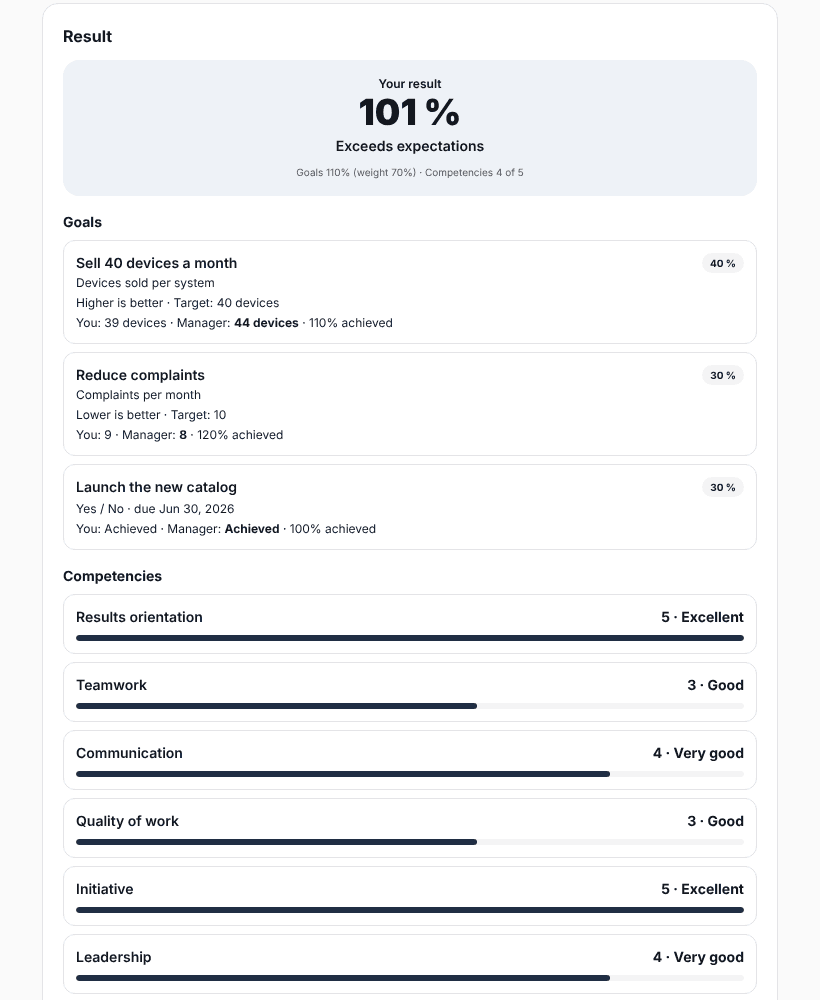
Don’t discuss pay in this meeting. If the review feeds raises, have that conversation a few days later. When pay is on the table, the person only hears the number.
To prepare the meeting with one person’s full review form:
Free performance review template (Excel and Word)Goals, self-review, manager review, 9-box calibration and sign-off, in a portal where each person signs in without an account.
See SurvIQ Performance Review